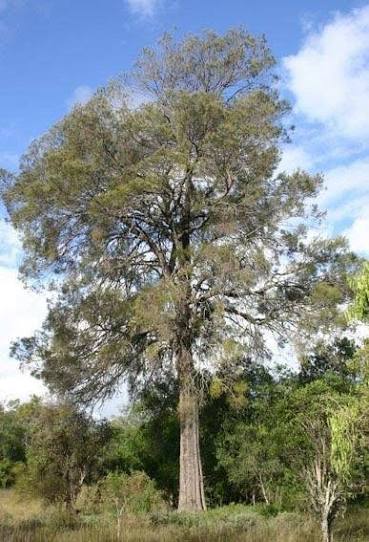
What is Australian Sheoak?
Australian Sheoak is Bushwala's market name for Casuarina cristata, a hardy Australian tree used in forestry, windbreaks and land rehabilitation on drier ground.
What is the scientific name of Australian Sheoak?
The scientific name of Australian Sheoak is Casuarina cristata.
Is Australian Sheoak perennial or annual?
Australian Sheoak is a perennial species.
Is Australian Sheoak suitable for Pakistan?
Yes — Australian Sheoak is suited to Pakistan's drier and, where relevant, saline growing conditions. See the regional suitability table on this page for specifics.
Which areas of Pakistan are suitable for Australian Sheoak?
Australian Sheoak is rated Suitable for: Punjab, Sindh. Other zones may be Conditional or Not Recommended — see the full regional suitability table on this page.
Can Australian Sheoak grow in sandy soil?
Based on its soil profile (Drier, heavier soils than other casuarinas), check the soil notes above for sandy-soil suitability.
Can Australian Sheoak grow in saline soil?
Salinity tolerance is rated Moderate. It is not a first choice for genuinely saline ground — consider a higher-salinity-tolerance species instead.
What TDS/EC water can Australian Sheoak tolerate?
Moderate salinity tolerance; better suited to drier, heavier soils than to genuinely waterlogged saline ground (use Casuarina obesa for that).
How much water does Australian Sheoak require?
Suited to drier ground than most casuarinas — roughly 250–500mm/year. Irrigation need is rated Low.
How many plants should I grow per acre?
Shelterbelt row: 2×2m spacing (approx. 1,000 plants/acre). Slightly wider spacing on drier sites to reduce competition for moisture.
How much fodder can Australian Sheoak produce per acre?
Australian Sheoak is grown primarily for timber/fuelwood rather than fodder — see the wood/fuelwood yield section on this page.
What is the crude protein content of Australian Sheoak?
Australian Sheoak is grown primarily for timber/windbreak use, not fodder, so protein content is not typically relevant.
Is Australian Sheoak suitable for goats?
Australian Sheoak is not typically used as livestock fodder.
Is Australian Sheoak suitable for sheep?
Australian Sheoak is not typically used as livestock fodder.
Is Australian Sheoak suitable for cattle?
Australian Sheoak is not typically used as primary cattle fodder.
Does Australian Sheoak fix nitrogen?
Yes — it is a nitrogen-fixing species that can improve soil fertility over time.
How do you germinate Australian Sheoak seeds?
Sow fine seed onto the surface of nursery trays or bags, barely covering with sand. Keep moist until germination.
Does Australian Sheoak need seed treatment?
Propagated from seed in nursery beds or bags before field transplanting.
How long does Australian Sheoak take to establish?
Usable windbreak height by year 3; first fuelwood thinning from year 5–6; full rotation harvest at 10–12 years.
How long does Australian Sheoak live?
25–30+ years
What is the best planting density for Australian Sheoak?
Shelterbelt row: 2×2m spacing (approx. 1,000 plants/acre). Slightly wider spacing on drier sites to reduce competition for moisture.
Can Australian Sheoak grow without irrigation?
Yes, once established — drought tolerance is rated High.
Is Australian Sheoak drought tolerant?
Drought tolerance is rated High.
Is Australian Sheoak frost tolerant?
Frost tolerance is rated Moderate.
What is Australian Sheoak mainly used for?
Primarily: Timber, Windbreak, Fuelwood.