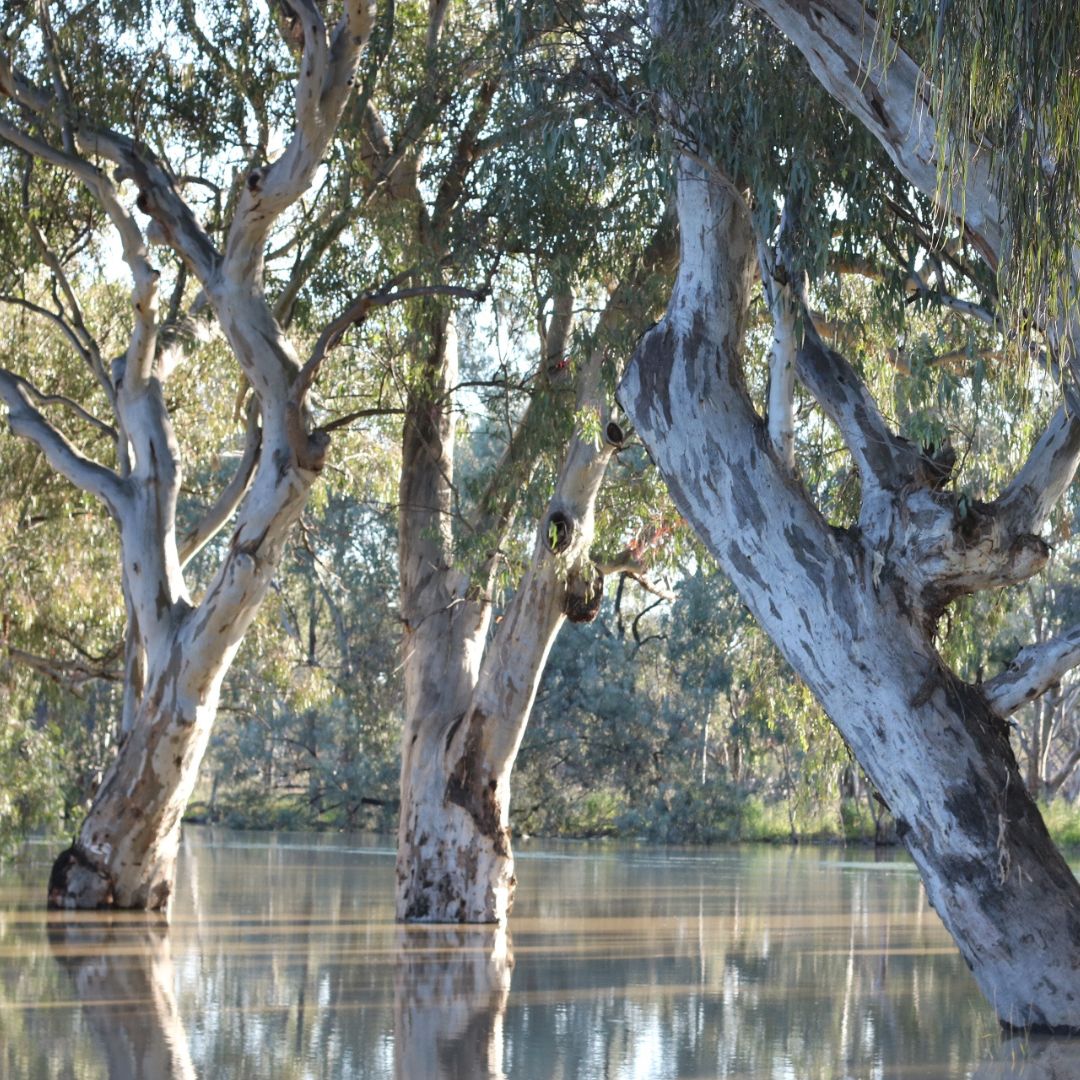
What is Australian Lal Safeda?
Australian Lal Safeda is Bushwala's market name for Eucalyptus camaldulensis subsp. obtusa, an Australian eucalyptus offered for forestry, fuelwood and dryland/riverine planting.
What is the scientific name of Australian Lal Safeda?
The scientific name of Australian Lal Safeda is Eucalyptus camaldulensis ssp. obtusa.
Is Australian Lal Safeda perennial or annual?
Australian Lal Safeda is a perennial species.
Is Australian Lal Safeda suitable for Pakistan?
Yes — Australian Lal Safeda is suited to Pakistan's drier and, where relevant, saline growing conditions. See the regional suitability table on this page for specifics.
Which areas of Pakistan are suitable for Australian Lal Safeda?
Australian Lal Safeda is rated Suitable for: Punjab, Sindh. Other zones may be Conditional or Not Recommended — see the full regional suitability table on this page.
Can Australian Lal Safeda grow in sandy soil?
Based on its soil profile (Tolerates saline and waterlogged soils, riverine flats), check the soil notes above for sandy-soil suitability.
Can Australian Lal Safeda grow in saline soil?
Salinity tolerance is rated Moderate. It is not a first choice for genuinely saline ground — consider a higher-salinity-tolerance species instead.
What TDS/EC water can Australian Lal Safeda tolerate?
Moderate salinity tolerance; tolerates waterlogging well, making it well suited to canal banks, riverine flats and seasonally flooded land.
How much water does Australian Lal Safeda require?
Best with 300–800mm/year or reliable canal/riverine irrigation — one of the fastest growers in the catalog when moisture is adequate. Irrigation need is rated Moderate.
How many plants should I grow per acre?
Canal-side / boundary row: 2×2m spacing (approx. 1,000 plants/acre). Block plantation for timber: 2.5×2.5m spacing (approx. 650–700 plants/acre).
How much fodder can Australian Lal Safeda produce per acre?
Australian Lal Safeda is grown primarily for timber/fuelwood rather than fodder — see the wood/fuelwood yield section on this page.
What is the crude protein content of Australian Lal Safeda?
Australian Lal Safeda is grown primarily for timber/windbreak use, not fodder, so protein content is not typically relevant.
Is Australian Lal Safeda suitable for goats?
Australian Lal Safeda is not typically used as livestock fodder.
Is Australian Lal Safeda suitable for sheep?
Australian Lal Safeda is not typically used as livestock fodder.
Is Australian Lal Safeda suitable for cattle?
Australian Lal Safeda is not typically used as primary cattle fodder.
Does Australian Lal Safeda fix nitrogen?
No — Australian Lal Safeda does not fix nitrogen.
How do you germinate Australian Lal Safeda seeds?
Sow fine seed onto the surface of nursery bags filled with well-drained potting mix, barely covered. Keep moist and shaded initially.
Does Australian Lal Safeda need seed treatment?
Propagated from seed, raised in nursery bags before transplanting. Among the easiest eucalypts to raise from seed.
How long does Australian Lal Safeda take to establish?
Usable poles/fuelwood from year 4–5; full timber rotation at 8–10 years; can be coppiced for repeat harvests from the same root stock.
How long does Australian Lal Safeda live?
20–30+ years, coppices for repeat rotations
What is the best planting density for Australian Lal Safeda?
Canal-side / boundary row: 2×2m spacing (approx. 1,000 plants/acre). Block plantation for timber: 2.5×2.5m spacing (approx. 650–700 plants/acre).
Can Australian Lal Safeda grow without irrigation?
Not reliably — drought tolerance is rated Moderate.
Is Australian Lal Safeda drought tolerant?
Drought tolerance is rated Moderate.
Is Australian Lal Safeda frost tolerant?
Frost tolerance is rated Low.
What is Australian Lal Safeda mainly used for?
Primarily: Timber, Windbreak, Fuelwood.